
TNS partners with NBA & NCF to spread citizen science through the Campus Biodiversity Register
Today marks a monumental leap forward for citizen science and youth-led conservation in India!
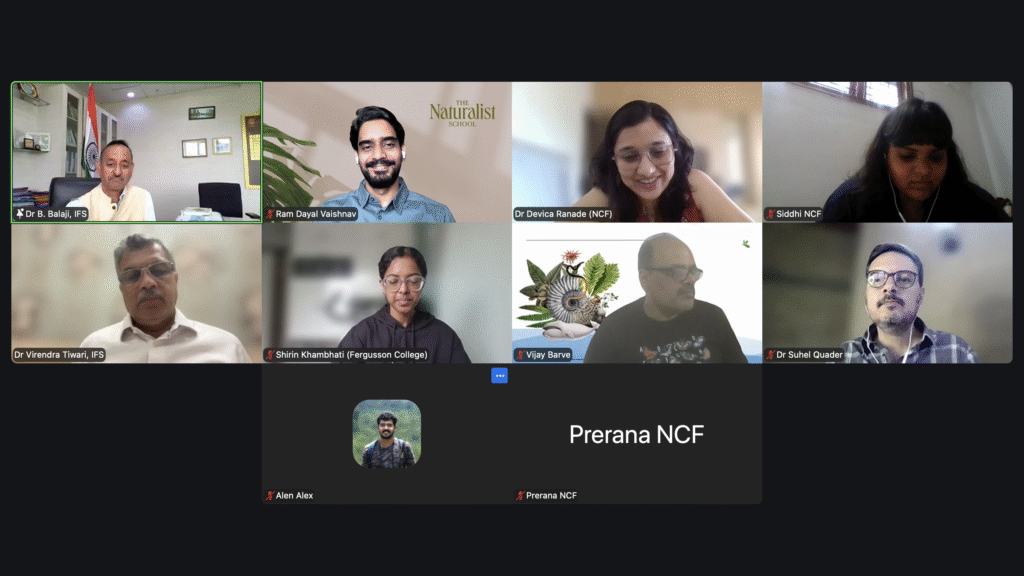
On August 22, hundreds of educators, researchers, students, and conservation enthusiasts gathered online via Zoom for the official national launch of the Campus Biodiversity Register (CBR) initiative.
The Naturalist School is a knowledge partners in this initiative which is jointly spearheaded by the National Biodiversity Authority (NBA) and the Nature Conservation Foundation (NCF). The CBR initiative is set to turn educational campuses across India into vibrant, living laboratories for nature exploration, ecological documentation, and youth leadership.
🚀 Highlights from Today’s Official Launch Ceremony
The virtual launch event was filled with energy, vision, and a shared passion for democratizing biodiversity science:
- Welcome Address: Delivered by Dr. B. Balaji, IFS, Member-Secretary, National Biodiversity Authority (NBA), setting the stage for institutionalizing citizen science across higher education.
- Launch & Special Address: Inaugurated by Shri Virendra Tiwari, IFS (Retd.), Chairperson, National Biodiversity Authority (NBA), highlighting the strategic importance of campus documentation in India’s broader conservation architecture.
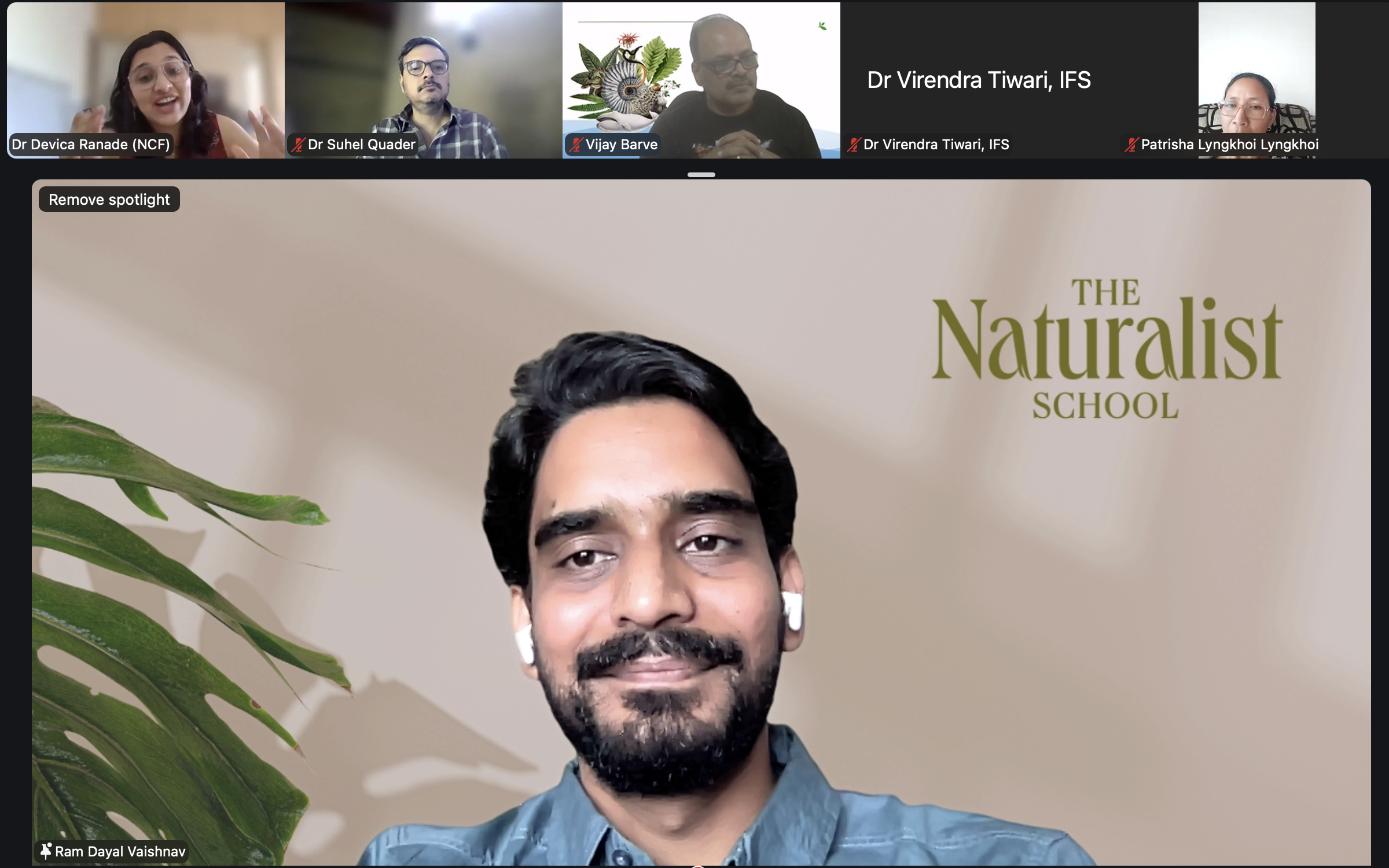
- Spotlight on Knowledge Partners: Inspiring keynotes by Dr. Vijay Barve (DiversityIndia) and Ram Dayal Vaishnav (Head of Operations & Citizen Engagement at The Naturalist School).
- National Biodiversity Quiz: A spirited interactive quiz celebrating India’s incredible flora and fauna, with excited students taking home cool prizes!
🔬 What is the Campus Biodiversity Register (CBR)?
Inspired by the statutory People’s Biodiversity Register (PBR) framework mandated under India’s landmark Biological Diversity Act (which documents local bio-resources, landscapes, and traditional knowledge at village and municipal levels), the Campus Biodiversity Register (CBR) brings this vision into higher education institutions.
Whether it’s a bustling urban campus or a quiet rural college, every campus harbors a surprisingly rich array of life – from insects, butterflies, and birds to frogs, snakes, fungi, and trees. CBR empowers students, faculty, and staff in colleges and universities across India to collectively discover, document, and celebrate this biodiversity right where they study and work.
Through organized biodiversity surveys, campus nature walks, and everyday observations using digital citizen science tools, colleges will create official, open-access CBRs that nourish global biodiversity databases, aid institutional sustainability, and foster scientific literacy.
🎙️ Insights from TNS: Connecting Data, Nature, and Grassroots Leadership
Speaking at today’s national launch on behalf of The Naturalist School (TNS), Ram Dayal Vaishnav (Heading Operations & Citizen Engagement), delivered a deeply insightful reflection on the global and local state of citizen science. Here are the key takeaways from Ram’s address:
1. The Global Data Crisis & The Role of Citizen Science
- 2 Million+ vs. <8%: Over 2 million species have been described on Earth, yet less than 8% have been formally evaluated by the IUCN. Data deficiency is a massive crisis in modern conservation.
- The Power of CitSci: Citizen science is a crucial partner complementing the efforts of government institutions and academic researchers. Today, over 60% of data on the Global Biodiversity Information Facility (GBIF) comes directly from citizen science observations!
- Global South Leadership: While the Global North has historically utilized citizen science tools in greater volumes, it is the Global South, which is very rich in biodiversity, that actually needs it most. India is stepping up to take a decisive global lead.
2. Honoring Pioneers & Expanding Across All Taxa
- Pioneers & All-Taxa Expansion: India’s success rests on strong foundations – from DiversityIndia (a true pioneer and the “OG” of Indian species documentation) to the birding community’s phenomenal achievements under NCF’s leadership. TNS has actively built collaborative efforts to expand this momentum to all taxa (insects, reptiles, amphibians, flora, fungi, and more).
- From CNC 2023 to Continuous Quality Engagement: The City Nature Challenge (CNC) 2023 marked a major milestone by engaging all States and Union Territories across India. However, the true challenge now is building long-term, regular contributors providing high-quality, continuous observations. Grassroots initiatives – such as the student and faculty-led movement in Nanakmatta (Uttarakhand) – prove that institutional hubs can sustain long-term excellence.
3. Beyond Data: Fostering Genuine “Nature Connections”
“CBR is a an excellent approach, but we must be very thoughtful. Along with the data, we must also focus deeply on nature connections.” – Ram Dayal Vaishnav, TNS
- Nature Interpretation & Livelihoods: At TNS, nature interpretation is our core vehicle. We provide livelihood, training, and capacity-building programs for nature enthusiasts passionate about making a career in naturalism and eco-guiding through government-recognized certificates under the Skill India framework.
- Community Alignment: TNS proudly works with Forest Departments and tribal/indigenous communities across India, while engaging everyday citizens through walks, talks, and hands-on citizen science.
4. Policy Integration & Ethical Citizen Science
- Multi-Level Empowerment: TNS works at all levels – from international forums like UNEP and the Convention on Biological Diversity (CBD) down to students and grassroots communities.
- NBA & PBR Integration: As key catalysts for the National and International Youth Biodiversity Conferences in Hyderabad, TNS works closely with State Biodiversity Boards (SBBs) to integrate citizen science methodologies further.
- Data Sensitivity & Conservation Ethics: Ram emphasized that citizen science must be practiced responsibly. TNS actively educates participants on what NOT to share publicly – ensuring that precise location coordinates for threatened, endangered, or heavily poached species remain shielded from illegal trade and exploitation.
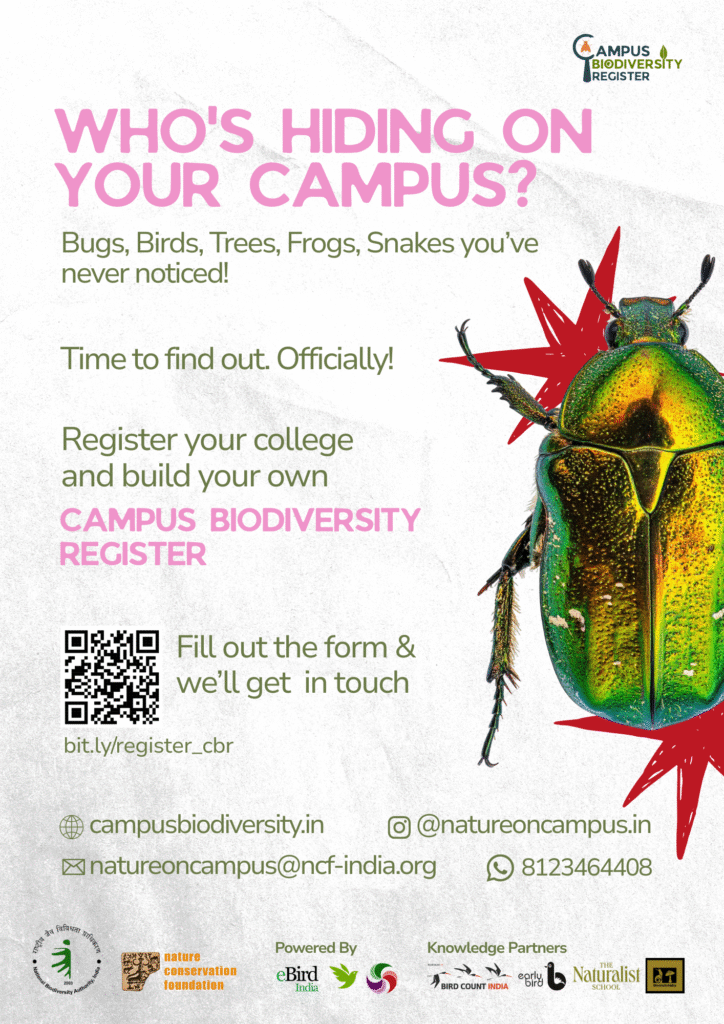
📢 Calling All Colleges Across India: Join the CBR Movement Today!
At The Naturalist School, we are super excited to help enable India’s incredible network of colleges and universities to take the lead in citizen science nationally and stand as flag-bearers at the global level!
Whether you are a college student, professor, principal, NSS/NCC volunteer, or eco-club member – this is your invitation to bring your campus onto the global biodiversity map!
👣 3 Easy Steps to Get Started:
- Start Observing & Documenting your observations on platforms like iNaturalist, eBird, and SeasonWatch.
- Register Your Institution by heading to bit.ly/register_cbr or campusbiodiversity.in.
- Form Your Campus Team by connecting with interested students, faculty members, and nature enthusiasts on your campus.
📬 Get in Touch & Connect:
- 🌐 Website: campusbiodiversity.in
- 📋 Registration Form: bit.ly/register_cbr
- 📸 Instagram: @natureoncampus.in
- ✉️ Email: natureoncampus@ncf-india.org
- 📞 WhatsApp / Phone: +91 81234 64408
Let’s discover, document, and protect the biodiversity right outside our classrooms. Join the Campus Biodiversity Register today! 🌿🐞🐦🌸
No Comments